Skip to content
Irrigation & Water Management

Seed-Maize Drip Irrigation, Fertigation and Automation

A seed-maize field with fertigated drip irrigation, block-level hydraulic control and soil-moisture monitoring, observed with operating data through one production season.

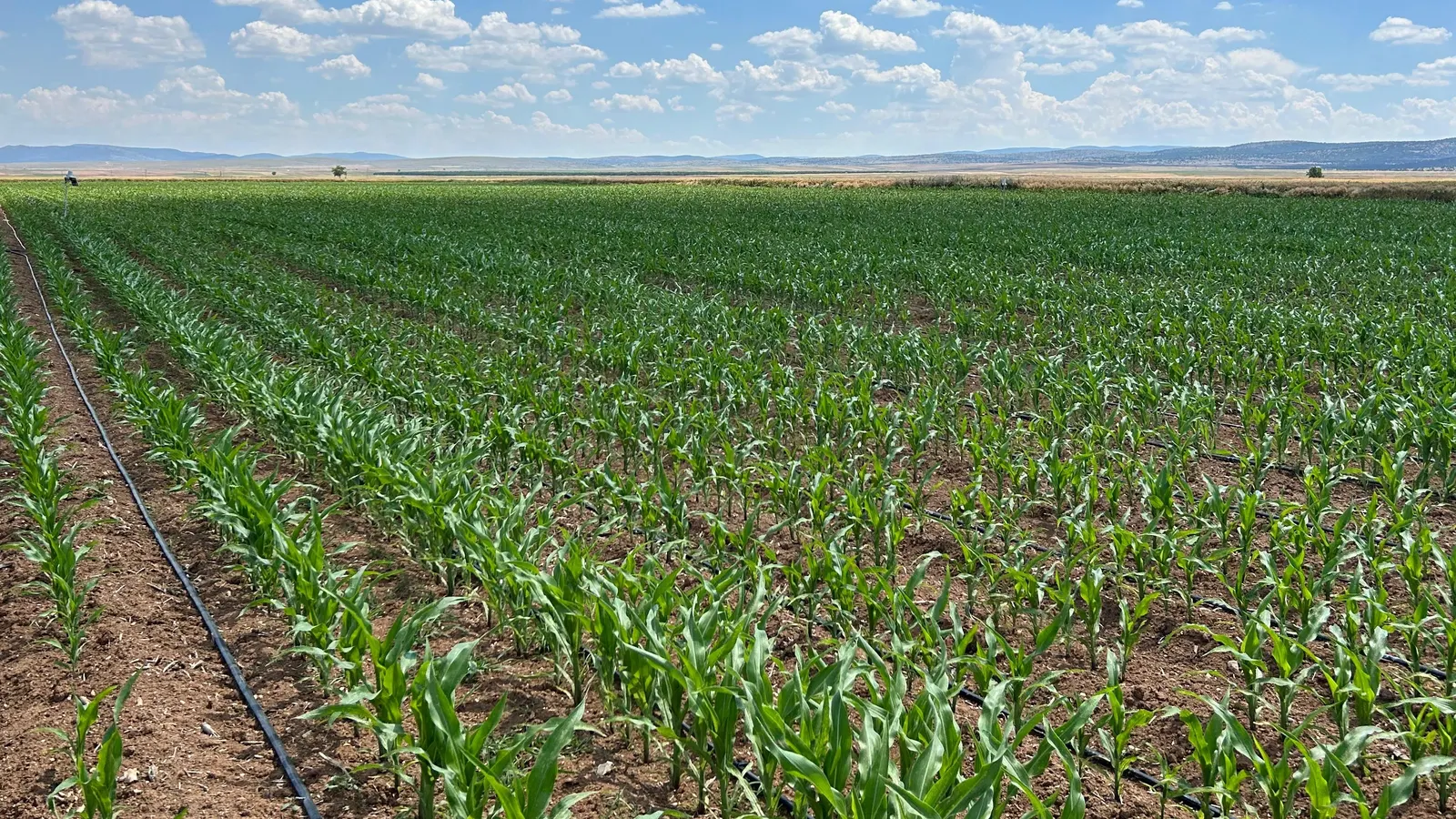
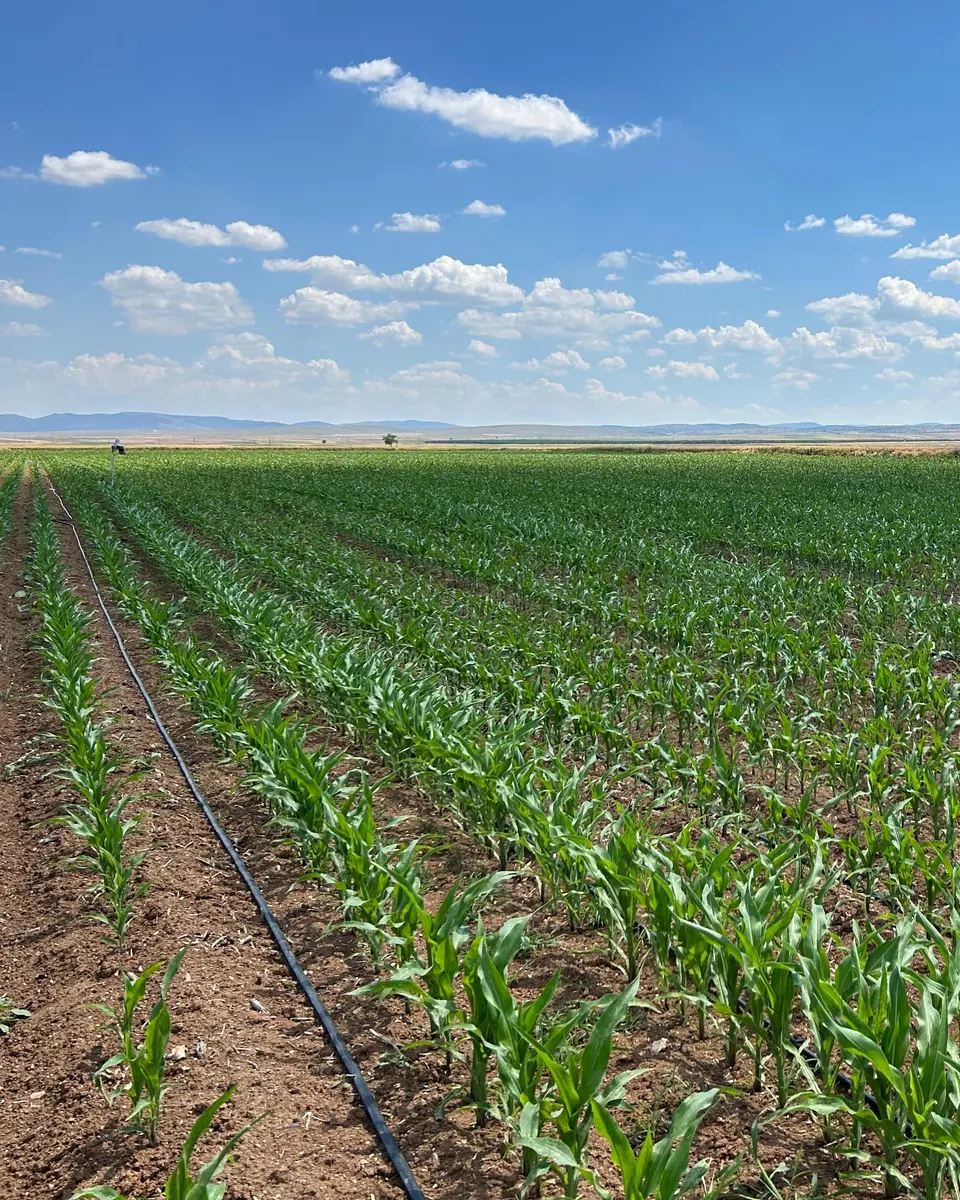
Rows of young maize with black drip lines running between them towards the horizon
Field photographDrip laterals across the seed-maize field

Implemented and commissioned

AGIMEX role: Design, product supply, field implementation, automation and commissioning of the drip irrigation and fertigation system; then collection, validation and reporting of field data to the operating team through one production season.

In seed maize, irrigation is more than getting water onto the field. Each irrigation block has its own requirement, fertigation has to be applied under control, moisture movement in the root zone has to be followed, and equipment has to be confirmed to run as planned. On this project AGIMEX brought the fertigation unit, block-level hydraulic valve manifolds, the field controller and the soil-moisture stations into one operating logic. The work did not stop at commissioning: through the season, irrigation records, meter and flow data, soil moisture, weather and satellite vegetation indicators were read together, and findings were passed to the responsible team.

  • Water source and headworks
  • Fertigation
  • Block distribution
  • Field control and monitoring
Conceptual diagram; not a site layout or construction drawing.

Data coverage from one season

These indicators describe the scope of monitoring carried out through one production season; they are not a performance result.

Agricultural intelligence layers

Information moves through five layers: field intelligence carries what is physically happening, engineering intelligence what the installed system was designed to do, operational intelligence how the infrastructure is running, decision intelligence which decision needs evaluating, and performance intelligence the gap between expected and actual. The relationship between the engineering and operational layers is verification: it compares intended behaviour with observed behaviour and carries the difference into the decision layer. What performance shows feeds back into operation and design.

  1. Field intelligenceWhat is physically happening?
  2. Engineering intelligenceWhat was the system designed to do?
  3. Operational intelligenceHow is the infrastructure running?
  4. VerificationCompares engineering intelligence with operational intelligence, and carries the difference into decision.
  5. Decision intelligenceWhich decision needs evaluating?
  6. Performance intelligenceHow do expected and actual differ?

Performance intelligence → Operational intelligence / Engineering intelligence

The diagram shows the general structure of the layers; what was done at each layer in this study is set out below.

Continuous season coverage
117 days
Measurement and operating records processed
334,918
Period in which the model was compared with field measurements
85 days
Field sensors, irrigation records, weather data, forecast models, satellite imagery and operating records
7+ sources
Diagnostics for data quality, equipment health, irrigation application and system consistency
Nearly 30 checks

The indicators come from an anonymised season report produced with AGIMEX’s own reporting tools. The report and source data are retained within the company; the client is not identified.

Field evidence

  • Rows of young maize with black drip lines running between them towards the horizon
    Drip laterals across the seed-maize field
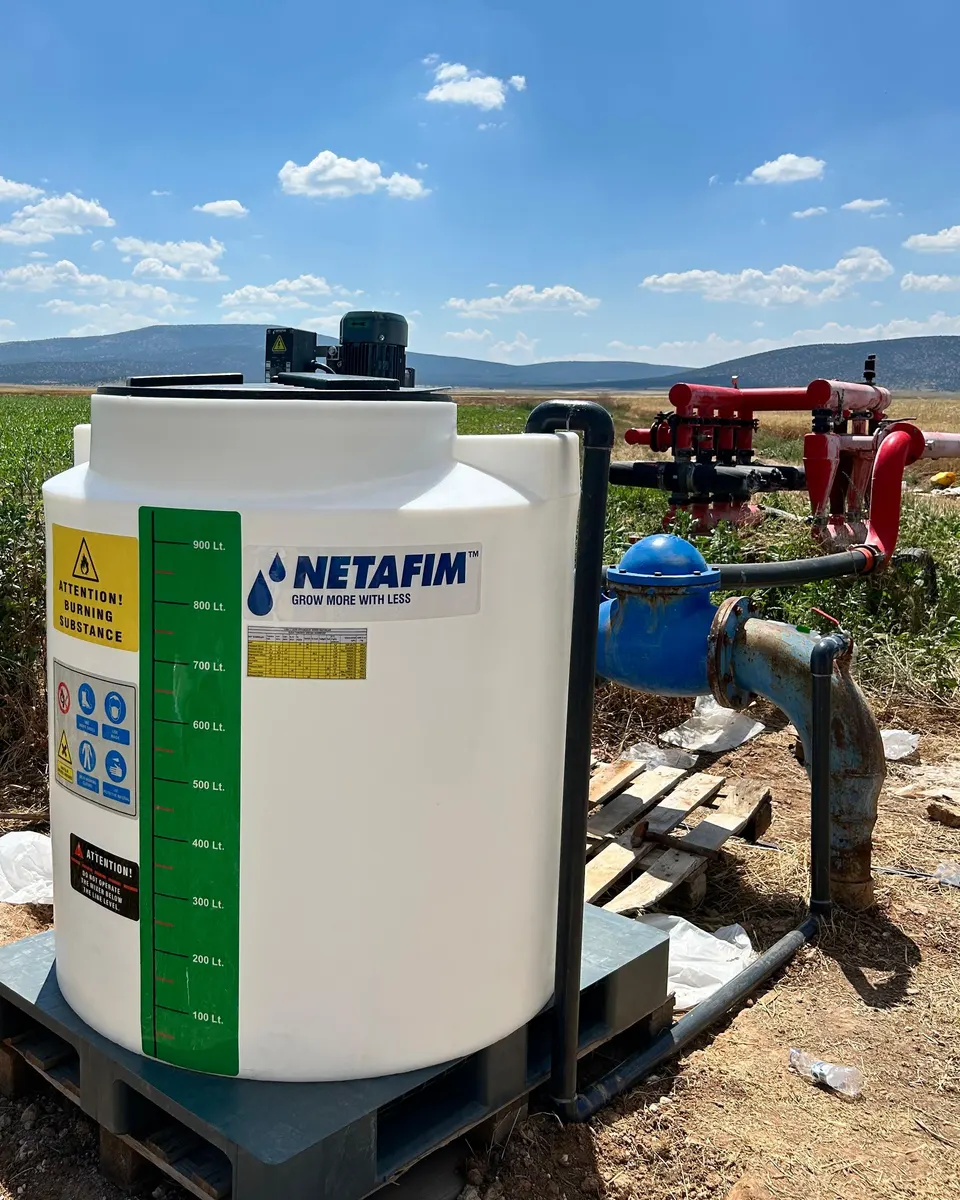
  • White fertiliser mixing tank with a dosing pump beside the irrigation headworks pipework
    Fertigation tank and dosing unit at the irrigation headworks
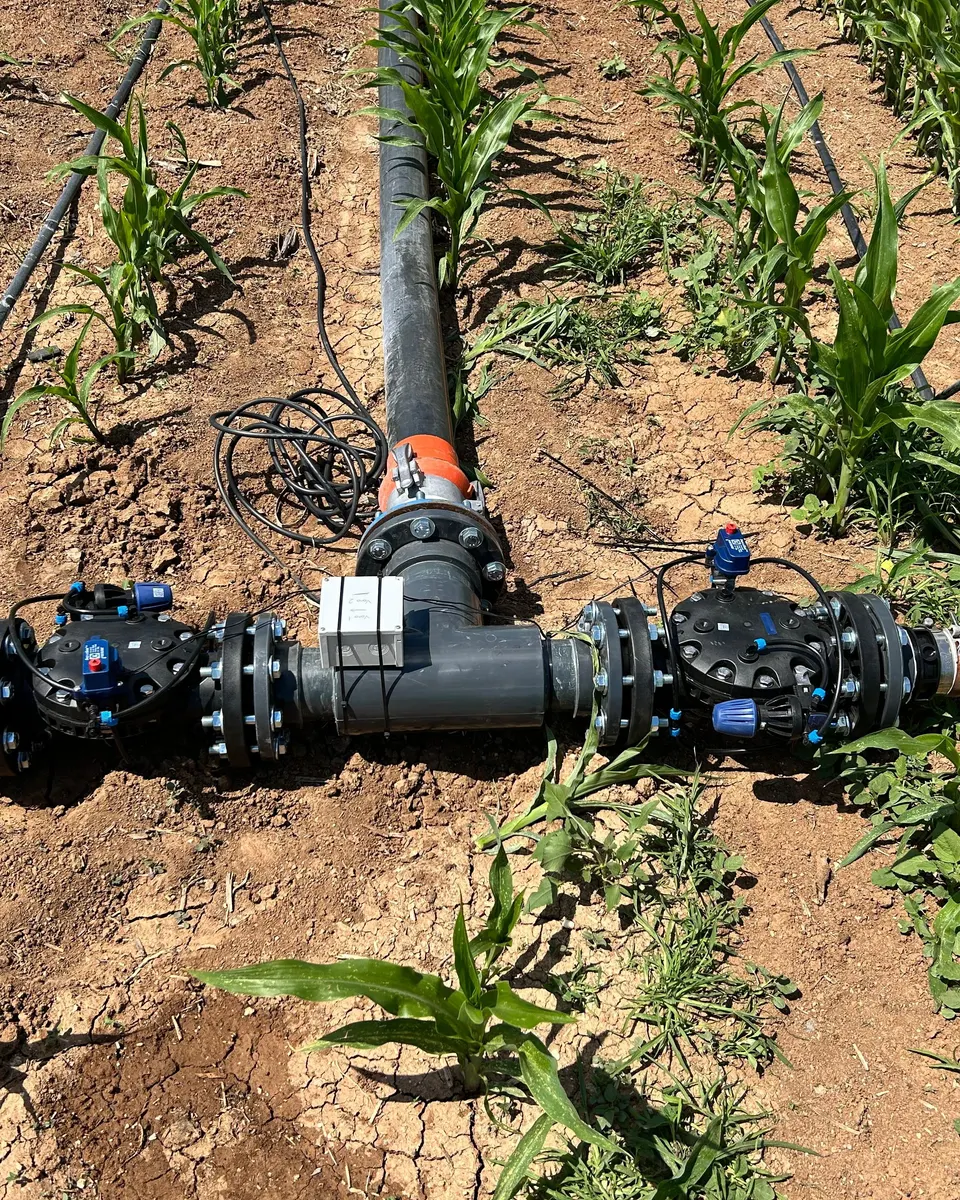
  • Two hydraulic valves on a PVC manifold connecting a supply pipe to lay-flat and drip lines in the crop
    Hydraulic valve manifold supplying an irrigation block
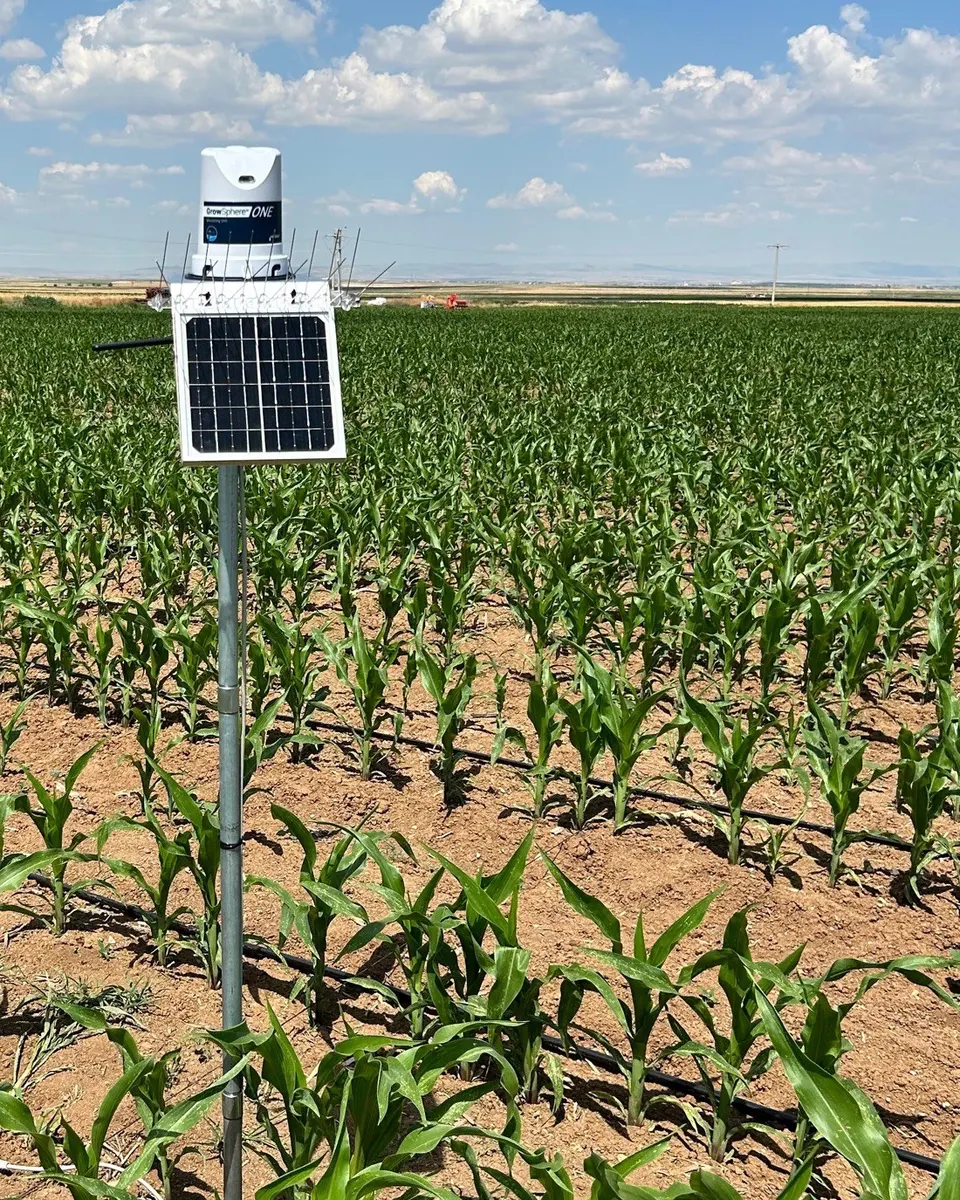
  • Solar-powered GS-ONE field station on a post in a young maize field with drip lines between the rows
    Field observation of weather and environmental conditions using a GS-ONE station.
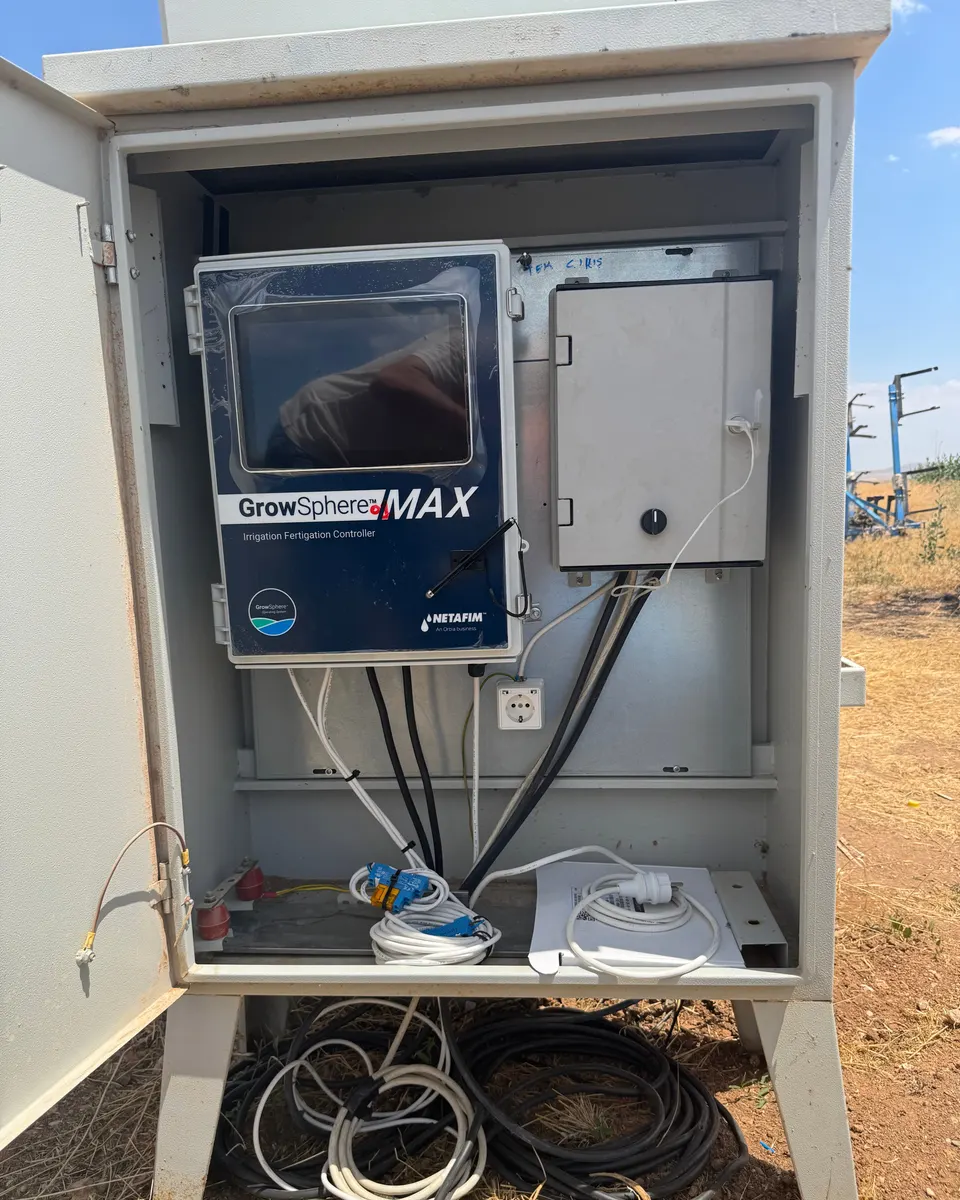
  • Open field cabinet with an irrigation and fertigation controller and its cabling
    Field irrigation and fertigation controller
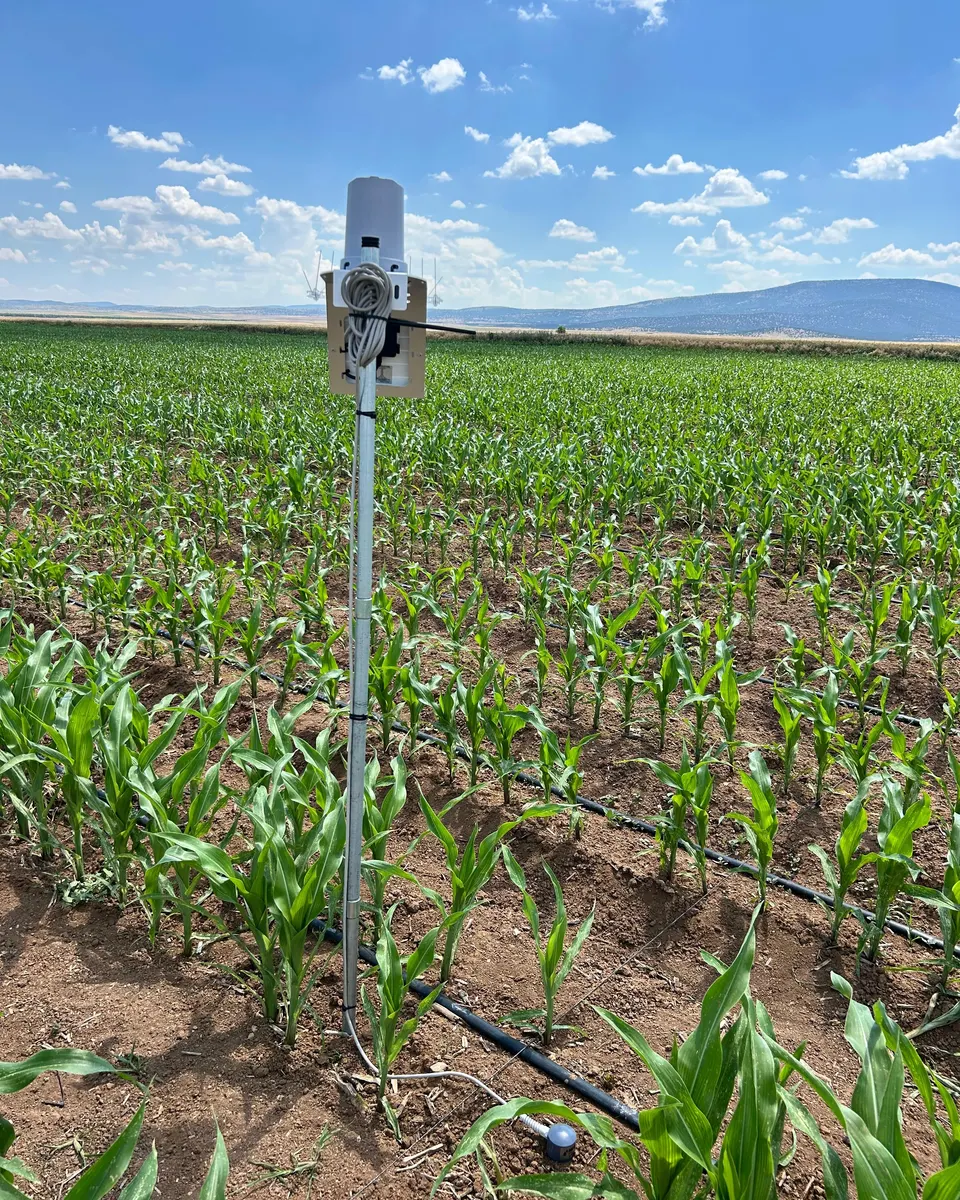
  • Monitoring mast with a soil probe cable beside a drip line in a maize field
    Soil-moisture monitoring station within the crop

What was monitored through the season

Monitoring followed the same five layers described across this site. What was done at each layer in this study:

  1. Field Intelligence

    Soil-moisture profile, water meter and flow, valve states, rainfall and weather conditions were followed from the field station; vegetation development was followed from satellite imagery.

  2. Engineering Intelligence

    Applied water, effective rainfall, crop water use, root-zone storage change and drainage below the root zone were calculated in one water balance. Calculated root-zone water was compared with sensor readings over 85 days, which showed how reliable the estimates are when no measurement exists and where the model may drift.

  3. Operational Intelligence

    Irrigation cycles, valve run times, programme overlaps, controller connectivity and field-unit power were recorded through the season. Water demand and stress risk were read against crop growth stages; critical phenological periods were treated separately.

  4. Decision Intelligence

    Every number was questioned before it became a finding: are there frozen sensor values? Are there physically impossible jumps? Are values observed outside the measurement range? Was a moisture rise without an irrigation record, or unmeasured water while a valve was running, detected? Field measurements were cross-checked against weather data, forecast models, reference evapotranspiration calculations and satellite vegetation indicators. Items needing attention were passed to the responsible team.

  5. Performance Intelligence

    Engineering intent was compared with observed behaviour. Without comparable baseline data, reliable cost records and verified production results, no water, fertiliser, energy or yield saving is published.

The method in general: Data-Driven Agriculture · From data to decisions: every indicator needs a counterpart

When a warning is raised

The checks in season monitoring respond when something unusual occurs and pass the condition to the responsible team.

  • Irrigation duration and frequency

    Condition:A single application delivers more water than the root zone can hold.

    What the check does:Drainage risk is flagged, and shorter, more frequent applications are put up for review.

  • Keeping water and nutrients in the root zone

    Condition:Water moves below the root zone during fertigation.

    What the check does:The risk of nutrients leaving the active root zone is flagged separately.

  • Flow and meter verification

    Condition:Measured flow departs from the recorded system value.

    What the check does:Capacity, area and application-rate definitions go onto the check list.

  • Valve and programme management

    Condition:A valve stays open or closed outside its programme, or two programmes overlap.

    What the check does:Flagged as a warning.

  • Sensor reliability

    Condition:A sensor freezes at one value, makes a physically impossible jump or reads outside its measurement range.

    What the check does:The data is set aside from analysis and the sensor goes onto the check list; decisions do not rest on wrong data.

  • Wetted strip and lateral layout

    Condition:Moisture movement does not reach the effective root depth and the row layout.

    What the check does:Lateral spacing, irrigation duration and emitter selection come up for review.

  • Record integrity

    Condition:Soil moisture rises with no irrigation record, or no water is measured while a valve is running.

    What the check does:The event is flagged as a record inconsistency and investigated.

  • Maintenance and communication

    Condition:Controller connectivity drops, field-unit power falls or the same warning repeats.

    What the check does:Passed to the team for early intervention.

Delivered system

An operating drip irrigation and fertigation system with field control and soil-moisture monitoring, and a season evaluation report that reads the system’s operating data through one production season.

Client identity, site location and identifying layout details are withheld for confidentiality.

Is your irrigation system just running, or can it show what it is doing?

If you are planning a new irrigation and fertigation investment, or want to make the behaviour of water, fertiliser and field equipment visible in your existing system, talk to the AGIMEX project team.

Let’s review your project together

Explore our capabilities

Related methodology

Selected Project Studies

Design drawing

Design completed

Irrigation & Water Management

Irrigation Automation for a Large-Scale Orchard

Orchard · measurement-backed irrigation automation · Türkiye · 2026

AGIMEX role: Engineering & design

Block-level valve control, flow and water meter measurement, soil moisture monitoring in reference blocks, fertigation control, alert scenarios and irrigation reporting.

View study →
Design drawing

Design completed

Irrigation Engineering & Water Management

Multi-Zone and Expandable Irrigation Infrastructure

Multi-zone, automated and expandable irrigation infrastructure · Türkiye · 2026

AGIMEX role: System architecture · Hydraulic design · Automation design

Irrigation and automation design with multiple water sources, zone control and room to expand, for orchard, vegetable, pasture and landscape areas.

View study →