Skip to content
Irrigation & Water Management

Irrigation Automation for a Large-Scale Orchard

Engineering and design of measurement-backed irrigation automation for a multi-block orchard: programmed and remote valve control, water tracking through flow measurement and a water meter, soil moisture monitoring in reference blocks and fertigation control were set up as one system.

Design completed

AGIMEX role: Engineering and design of the irrigation automation completed and delivered.

In a large orchard, the value of irrigation automation is not limited to opening and closing valves remotely. The real question is whether the water applied reaches the right place in the right amount. On this project AGIMEX designed irrigation control together with two measurement layers: flow measurement and a water meter set up to show how much water each irrigation actually applied, and soil moisture probes in reference blocks set up to show what that water does in the root zone. Field control units, output extensions, control cable routes, links to the water and fertigation centres and alert scenarios were brought together in one automation design.

At a glance

  • Every irrigation valve in the orchard was designed to be programmed from one system, controlled remotely and run in sequence, including night irrigation.
  • Flow measurement and a water meter were set up to show the water actually applied in each irrigation, not just the run time; expected and measured flow are compared.
  • Soil moisture probes in reference blocks make visible whether water is held in the root zone or drains below it.
  • Fertigation was set up to be applied within the same irrigation programme, block by block, with pre-irrigation, fertiliser and flush phases.
  • Control
  • Field connections
  • Valve groups
  • Irrigation blocks
Conceptual diagram; not a site layout or construction drawing.

Why was time-based automation not enough?

Automation without measurement only knows time: it says how long a valve stays open, but not whether water actually flowed, how much of it reached the block or what happened in the root zone. A burst pipe, a broken line, a valve that fails to open or leaks, or a pump that delivers no water is only discovered once someone notices it in the field; until then the blocks are irrigated blind. In a large orchard that delay costs both water and crop. The design therefore treated control together with flow and soil moisture measurement: the system was set up not only to start irrigation but also to verify that it happened as intended.

Which layers make up the system?

The design was developed in five layers, from valve control to decision support:

  1. Control and programming: block-level valve programming, sequence management, grouping of simultaneously open valves within pump capacity, and remote control.

  2. Water measurement: instantaneous flow and total consumption, with expected and actual flow compared for each irrigation.

  3. Soil moisture: root-zone moisture profile monitoring in reference blocks.

  4. Fertigation: automatic control of the fertigation unit from within the irrigation programme.

  5. Alerts and reporting: flow deviation alerts, irrigation records, and water reports by block and by season.

What was the system designed to do?

Irrigation control and operation

The whole orchard was set up to be managed centrally, by a single operator where needed. Irrigation is planned around the crop's needs rather than the field crew's schedule.

Capabilities

  • Automatic control of all valves
  • Daily and weekly irrigation programmes
  • Valve sequence management
  • Night irrigation
  • Block-based irrigation
  • Several valves running at once within pump capacity
  • Remote control

Water management: flow and water meter

The water applied is measured instead of inferred from run time. How much water each irrigation actually used, and how much each block consumed, is recorded.

Capabilities

  • Instantaneous flow measurement
  • Total water consumption measurement
  • Block-level water consumption analysis
  • Actual water volume per irrigation
  • Expected versus actual flow comparison

Soil moisture management

Probes in reference blocks show what the water does in the root zone. Run times rest on measurement rather than estimates.

Capabilities

  • Soil moisture measurement
  • Root-zone moisture tracking
  • Visibility of over-irrigation and deep drainage
  • Detection of under-irrigation
  • Run-time optimisation from sensor data
  • Reference block monitoring

Fertigation

Fertilising stops being a separate task and becomes a phase of the irrigation programme, read together with flow and soil moisture data.

Capabilities

  • Automatic control of the fertigation unit
  • Pre-irrigation, fertiliser and flush phases within an irrigation
  • Block-based fertigation
  • Verification of fertiliser application against flow
  • Tracking the root-zone effect of fertigated irrigation

Fault detection and alerts

A deviation from expected flow becomes an alert without waiting for the problem to be noticed in the field.

Capabilities

  • Flow anomaly alarm
  • Burst pipe and broken line detection
  • Leaking valve detection
  • Valve opened but no water delivered
  • Pump running but no water flowing

Data, reporting and decision support

Irrigation records and measurements become the basis for the next irrigation decision.

Capabilities

  • Irrigation verification
  • Post-irrigation analysis
  • Water use reports
  • Seasonal water analysis
  • Irrigation optimisation
  • Data-based decision support

How was the irrigation automation set up?

The irrigation blocks were designed to be controlled by field control units distributed across the blocks. Control cable routes link these units to the water and fertigation centres, each with pumping, filtration, fertigation and a control unit. Flow measurement and the water meter connect to the control unit at the centres, and soil moisture probes to monitoring points in the reference blocks. Each valve command can therefore be read against the flow measured at that moment, and each irrigation against the moisture change in the root zone.

Engineering evidence

Design drawing (redrawn)Automation architecture

Irrigation blocks are served by distributed field control units. Control cable routes connect the units to two water and fertigation centres, each combining pumping, filtration, fertigation and the central controller. A mounting detail shows the field unit on a post with its cable entry and valve connection.

Water & fertigation centre 1
  • Pumping
  • Filtration
  • Fertigation
  • Controller
Water & fertigation centre 2
  • Pumping
  • Filtration
  • Fertigation
  • Controller
Irrigation blockControl cable route

Field control unit — mounting detail

  • Enclosure on post
  • Protected cable entry
  • Valve solenoid connection
  • Field control unit
  • Control cable route
  • Irrigation block

Schematic; not to scale and not a site layout.

Design drawing (redrawn): automation architecture connecting irrigation blocks, distributed field control units and water/fertigation centres. Not an as-built record.

What does it give the operation?

The benefit of measurement-backed automation shows less in individual features than in how irrigation is managed:

  • Less labour is needed; the orchard can be managed centrally by a single operator.
  • Irrigation discipline improves: programme, records and verification sit in one system.
  • Blind operation is reduced; irrigation faults become visible without waiting to be noticed in the field.
  • Water is used more efficiently because it is measured by block and by irrigation.
  • Management can see from data whether irrigation took place as planned.

Automation reduces labour; flow and soil moisture measurement show where the water and fertiliser actually go. Together they turn automatic irrigation into data-based irrigation management.

Which questions was the system designed to answer?

  • The valve opened; did water actually flow?

    The valve command is compared with measured flow. If no flow develops, the event is flagged as an alert.

  • How much water did an irrigation actually apply?

    The water meter records the actual volume for each irrigation and each block, so nothing has to be inferred from run time.

  • Is there a burst or a broken line?

    Flow above the expected value becomes an alert for a suspected burst pipe or broken line.

  • Is a valve leaking outside the programme?

    Flow measured while no valve is open points to a leaking valve.

  • Is the pump delivering water while it runs?

    No flow with the pump switched on was defined as a separate alarm condition.

  • Was the root zone wetted enough, or did water drain below it?

    Probes in the reference blocks show whether moisture stays in the root zone or moves into deeper layers.

  • Is the run time right?

    Over- or under-irrigation shows in the moisture data, and run times are adjusted from it.

  • Was the fertiliser actually applied?

    The fertiliser phase is linked to flow, and the root-zone effect of fertigated irrigation is read together with moisture data.

Which engineering outputs were prepared?

Irrigation automation design documentation covering the control architecture, measurement points, fertigation control set-up, irrigation programme and alert scenarios, the automation equipment schedule and the technical and commercial scope.

  • Irrigation automation control architecture
  • Block-level layout of field control units
  • Output extensions and connection equipment
  • Control cable routes
  • Control links to the water and fertigation centres
  • Flow measurement and water meter integration
  • Soil moisture monitoring points in reference blocks
  • Fertigation control set-up
  • Irrigation programme and valve sequence set-up
  • Alert and alarm scenarios
  • Automation equipment schedule
  • Technical and commercial scope document

Client identity, site location, land area, equipment quantities and commercial information are withheld for confidentiality.

Does your irrigation automation only open valves, or does it also show where the water goes?

In a large orchard, the automation decision does not start with choosing a controller. These questions come first:

  • How is the orchard divided into irrigation blocks, and in what order will they run?
  • How many valves can the pump capacity carry at once?
  • Where should water be measured?
  • In which reference blocks should soil moisture be monitored?
  • In which blocks, and on what programme, will fertigation be applied?
  • Which conditions should raise an alert, and who should receive it?

Share your orchard's block layout, your water source and your existing irrigation and fertigation equipment. AGIMEX will review the automation architecture and the measurement scope it needs with you.

Let’s review your project together

Explore our capabilities

Related methodology

Selected Project Studies

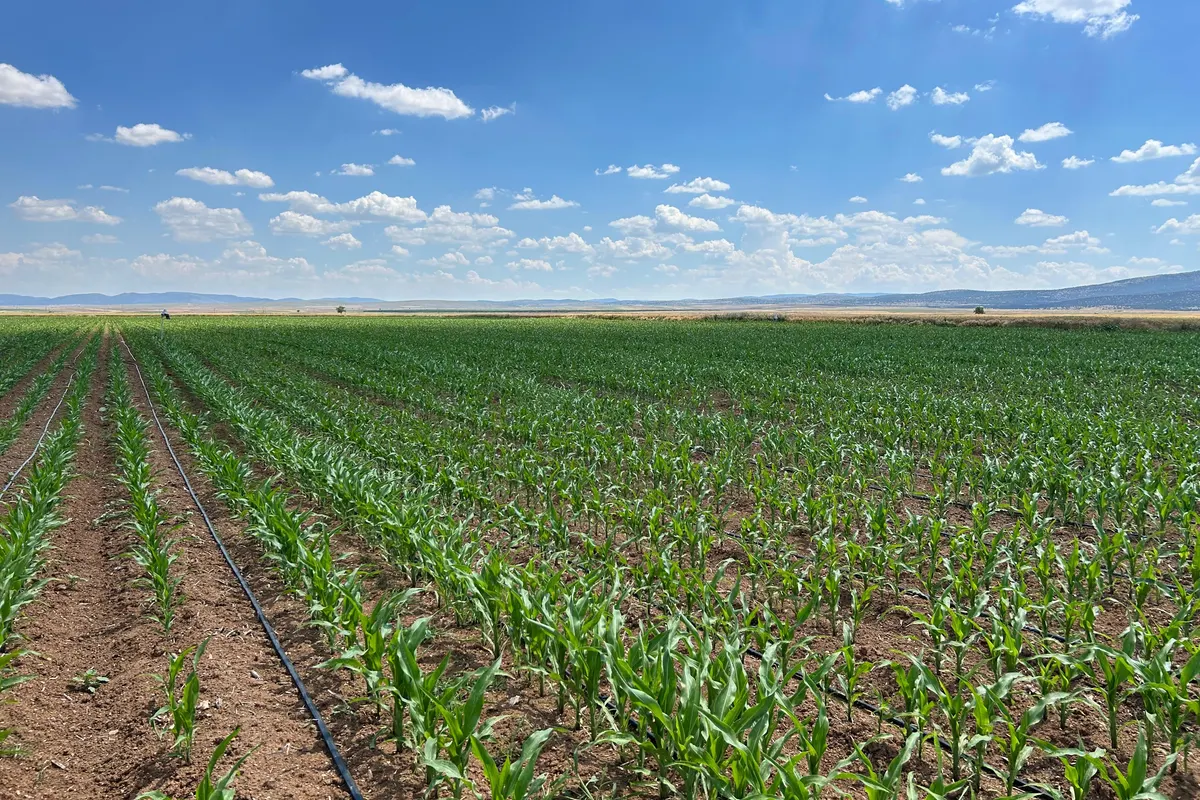
Rows of young maize with black drip lines running between them towards the horizon

Implemented and commissioned

Irrigation & Water Management

Seed-Maize Drip Irrigation, Fertigation and Automation

Seed maize · drip irrigation with fertigation · Türkiye · 2026

AGIMEX role: Design · Supply · Field implementation · Automation · Commissioning · Season monitoring

Drip irrigation with fertigation, block-level hydraulic distribution, field control, soil-moisture monitoring and season-long data evaluation.

View study →
Design drawing

Design completed

Irrigation Engineering & Water Management

Multi-Zone and Expandable Irrigation Infrastructure

Multi-zone, automated and expandable irrigation infrastructure · Türkiye · 2026

AGIMEX role: System architecture · Hydraulic design · Automation design

Irrigation and automation design with multiple water sources, zone control and room to expand, for orchard, vegetable, pasture and landscape areas.

View study →