Skip to content
Irrigation Engineering & Water Management

Multi-Zone and Expandable Irrigation Infrastructure

AGIMEX design of an irrigation infrastructure for orchard, vegetable, pasture and landscape areas with two water sources, zone control and phased expansion.

Design completed

Engineering and design delivered.

AGIMEX role: System architecture, hydraulic design, equipment criteria, fertigation structure, zone control and automation design for an irrigation infrastructure serving several production and use areas; coordination of implementation phases and quantities.

In this infrastructure, designed for orchard, vegetable production, pasture and landscape areas, two separate water sources, a shared main distribution and zone control bring different irrigation methods into one operating arrangement. The system was designed so that new production areas can be added in phases.

At a glance

  • Four area types are fed from the same infrastructure: pressure-regulated dripline in the orchard, subsurface drip in vegetable and landscape areas, sprinkler irrigation on pasture.
  • There are two separate water sources, each with pumping, filtration, fertigation and a control cabinet.
  • Each irrigation zone was designed to be managed through its own valve group, run time and hydraulic requirement.
  • Main distribution, valve architecture and automation were designed with headroom for zones added later.
  • Water source and storage
  • Pumping, filtration and fertigation
  • Main distribution
  • Zone valves and control
  • Area-specific irrigation
Conceptual diagram; not a site layout or construction drawing.

Why was one irrigation method not enough?

The four areas have different irrigation needs. The deep root zone of an orchard tree and the shallow root zone of vegetables are not irrigated at the same frequency. The mechanical conditions of pasture and the surface requirements of landscape areas cannot carry the same equipment either. The right answer was therefore not one system for every area. Different systems were brought together in one shared infrastructure that can be managed zone by zone.

Which tiers make up the design?

A system at this scale cannot be designed from pipe sizes and pump flows alone. Each zone differs in planting pattern, root structure, topography, irrigation duration and pressure requirement. The design was worked through in five tiers:

  1. Water source and storage: calculating the water demand and the irrigation storage areas, and how they are fed.

  2. Pumping, filtration and fertigation: two water sources, each with its own control cabinet.

  3. Main distribution: the shared network that carries water to the zones.

  4. Zone valves and field control: running each irrigation zone separately.

  5. Area-specific irrigation system: a separate method for orchard, vegetables, pasture and landscape.

Which irrigation system was designed for each area?

Orchard: pressure-regulated dripline

Long lateral lines, varying topography and the tree root zone were assessed together. The aim was to deliver fertiliser and water evenly to every point of the orchard, even on long lines and changing elevations.

Design criteria

  • Even fertiliser and water distribution, even on long lines
  • Pressure management across changing elevations
  • Controlled management of root-zone moisture
  • Equipment selected for UV and clogging resistance
  • Suitability for multi-season use
  • Zone-level hydraulic control

Vegetable production areas: subsurface drip

The shallow root zone, frequent irrigation and fertigation sensitivity came first.

Design criteria

  • Low-flow, precise water application
  • Operation suited to short irrigation intervals
  • Controlled infiltration and limited surface ponding
  • Balanced delivery of fertiliser to the root zone
  • Emitter selection matched to filtration
  • Protection against root intrusion
  • Independent management of irrigation zones

Pasture: sprinkler irrigation

On pasture, the equipment's resistance to site conditions was part of the design alongside irrigation performance.

Design criteria

  • Mechanical robustness
  • Less permanent equipment on the surface
  • Throw distance and overlap pattern
  • Wind conditions considered in method selection
  • Maintenance access

Landscape areas: subsurface drip

In landscape areas the surface impact of irrigation equipment was kept to a minimum.

Design criteria

  • Less surface equipment
  • An application method that limits evaporation loss
  • Protection against root intrusion
  • Mechanical robustness and limited surface deformation
  • Controlled infiltration
  • Equipment suited to long-term subsurface use

How were the irrigation design and automation design set up?

The design has two separate water sources. Each has pumping, filtration, fertigation and a control cabinet. The main distribution network carries water to zone valve groups, and multiple control cables from each cabinet operate those valve groups. Each irrigation zone was set up to be programmed by its own run time and hydraulic requirement, and all four irrigation methods to be monitored within one operating logic.

Design drawingIrrigation design and automation design: from two water sources to valve groups

Each of the two separate water sources feeds the main distribution through pumping, filtration and fertigation; the main distribution reaches the zone valve groups and, from there, the orchard, vegetable, pasture and landscape areas. Multiple control cables from each water source's control cabinet operate the same valve groups.

Irrigation design

  1. Water source and storage
  2. Water source 1 · Water source 2
  3. Pumping · Filtration · Fertigation
  4. Main distribution
  5. Zone valve groups
  6. Orchard · Vegetables · Pasture · Landscape

Automation design

  1. Control cabinet 1 · Control cabinet 2
  2. Multiple control cables
  3. Zone valve groups

Schematic; water sources, valve groups and line routes do not represent the site.

Design schematic (redrawn): irrigation and automation design from two separate water sources to zone valve groups. Not an as-built record.

Engineering evidence

Design drawing (redrawn)Field valve groups and control architecture

Two separate water sources, each with pumping, filtration, fertigation and a control cabinet. Multiple control cables run from each cabinet to groups of solenoid valves across the irrigation zones.

Water source 1

Pumping · Filtration · Fertigation

Control cabinet

  • Valve group
  • Valve group
  • Valve group

Water source 2

Pumping · Filtration · Fertigation

Control cabinet

  • Valve group
  • Valve group
  • Valve group
  • Multiple control cables
  • Valve group

Number, position and routing of valve groups are schematic and do not reproduce the site.

Design drawing (redrawn): field valve groups and control architecture for a multi-zone irrigation system. Not an as-built record.
Concept diagramIrrigation typologies in one system

Two separate water sources with pumping, filtration, fertigation and automation feed a shared distribution network that serves four irrigation typologies: pressure-regulated dripline in the orchard, sprinkler irrigation on pasture, and subsurface drip in landscape and vegetable areas.

Water sources

Pumping · Filtration · Fertigation · Automation

Main distribution and zone valves
  • Orchard — pressure-regulated dripline
  • Pasture — sprinkler irrigation
  • Landscape areas — subsurface drip
  • Vegetable areas — subsurface drip
Concept diagram: water sources, distribution and the irrigation typologies served by one multi-zone system.

How was the infrastructure designed to expand?

In agricultural investments not every area is brought into use at once. Production plans, site preparation and investment schedules change over time. This infrastructure was designed with the following flexibility:

  • It can be divided into implementation phases.
  • New irrigation zones can be added.
  • The main distribution network can be extended.
  • Control and automation capacity can be increased.
  • Different production areas can be connected later.

Expandability does not simply mean choosing larger pipes. Pumping capacity, filtration, main lines, valve architecture, control cables and automation scenarios have to follow the same development plan.

Which questions did the design answer?

  • How are different irrigation methods fed from the same infrastructure?

    Two separate water sources feed the shared main distribution. The difference between methods is resolved in the zone valve groups and the area-specific irrigation system.

  • How are the flow and pressure needs of each zone separated?

    Each zone connects to its own valve group. Zone flow and pressure are calculated separately in the hydraulic design.

  • Which zones can run at the same time?

    Zones that run together are grouped to stay within the capacity of the water sources and the main line.

  • How is fertigation applied?

    Fertigation sits on the pumping and filtration line of each water source. Which zone receives which programme is defined in the automation scenario.

  • How is equipment on the pasture protected?

    Mechanically robust equipment is selected and permanent surface equipment is reduced.

  • How is surface equipment reduced in landscape areas?

    With subsurface drip irrigation, the irrigation lines are placed below the surface.

  • How are new production areas added?

    Main distribution, valve architecture and control capacity are designed with headroom. A new zone connects to the distribution from the existing water sources.

  • How is automation prepared for later phases?

    The control architecture and the multiple control cable infrastructure are set up to leave capacity for valve groups added later.

Which engineering outputs were prepared?

Design documentation covering system architecture, hydraulic design, water demand and storage calculations, fertigation set-up, irrigation automation design, phase coordination and quantity schedules.

  • General layout of the irrigation system
  • Main distribution and zone control architecture
  • Hydraulic design
  • Water demand and storage calculations
  • Pumping and filtration design
  • Fertigation system set-up
  • Valve groups and zone control structure
  • Irrigation automation design
  • Field control and connection plans
  • Coordination of implementation phases
  • Equipment and quantity schedules
  • Technical criteria for implementation
  • Digital design and drawing files

Client identity, site location, exact layout, equipment quantities and commercial information are withheld for confidentiality.

Does your land have more than one production or use area?

When orchard, field, pasture, greenhouse and landscape areas draw on the same water source, the first decision is not the equipment brand. These questions come first:

  • How much water does each area need?
  • In what order will zones run, and which will run at the same time?
  • Are the existing water source and storage sufficient?
  • Which areas will receive fertigation?
  • What level of automation is needed?
  • In which direction will the system grow?

Share the area types, approximate sizes, your water source and planned investment phases. AGIMEX will assess the system architecture and the engineering scope needed together with you.

Let’s review your project together

Explore our capabilities

Related methodology

Selected Project Studies

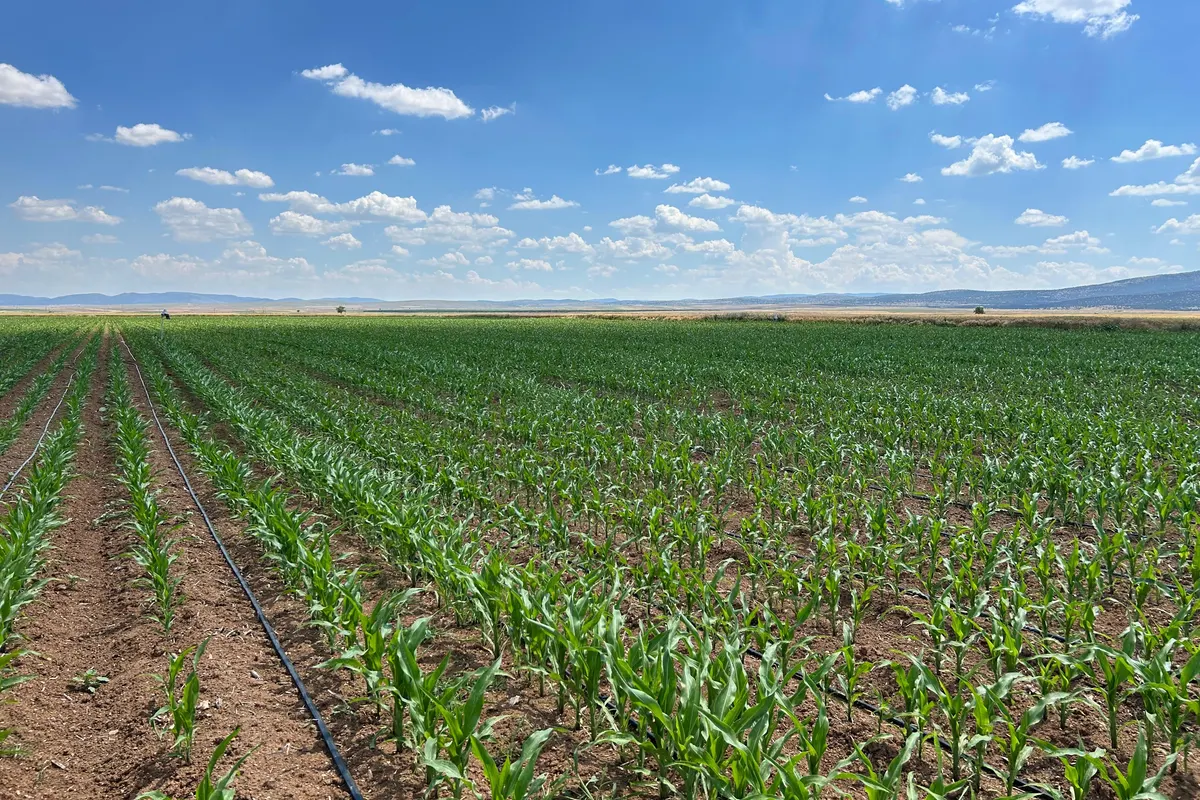
Rows of young maize with black drip lines running between them towards the horizon

Implemented and commissioned

Irrigation & Water Management

Seed-Maize Drip Irrigation, Fertigation and Automation

Seed maize · drip irrigation with fertigation · Türkiye · 2026

AGIMEX role: Design · Supply · Field implementation · Automation · Commissioning · Season monitoring

Drip irrigation with fertigation, block-level hydraulic distribution, field control, soil-moisture monitoring and season-long data evaluation.

View study →
Design drawing

Design completed

Irrigation & Water Management

Irrigation Automation for a Large-Scale Orchard

Orchard · measurement-backed irrigation automation · Türkiye · 2026

AGIMEX role: Engineering & design

Block-level valve control, flow and water meter measurement, soil moisture monitoring in reference blocks, fertigation control, alert scenarios and irrigation reporting.

View study →